Performance Review
Build High-Performing Teams Through Continuous Growth
Empower managers and employees with a continuous performance management platform that aligns individual goals with organizational objectives, encourages meaningful feedback, tracks progress, and supports employee development through every stage of their career.
Continuous Performance Management
Create a culture of accountability, collaboration, and continuous improvement with an integrated performance management system that connects goal setting, employee development, regular feedback, competency assessments, and succession planning into one unified platform.
-
 Goal Management
-
 1:1 Meetings
-
 KPI Tracking
-
 Competency Reviews
-
 Continuous Feedback
-
 Performance Ratings
-
 Succession Planning
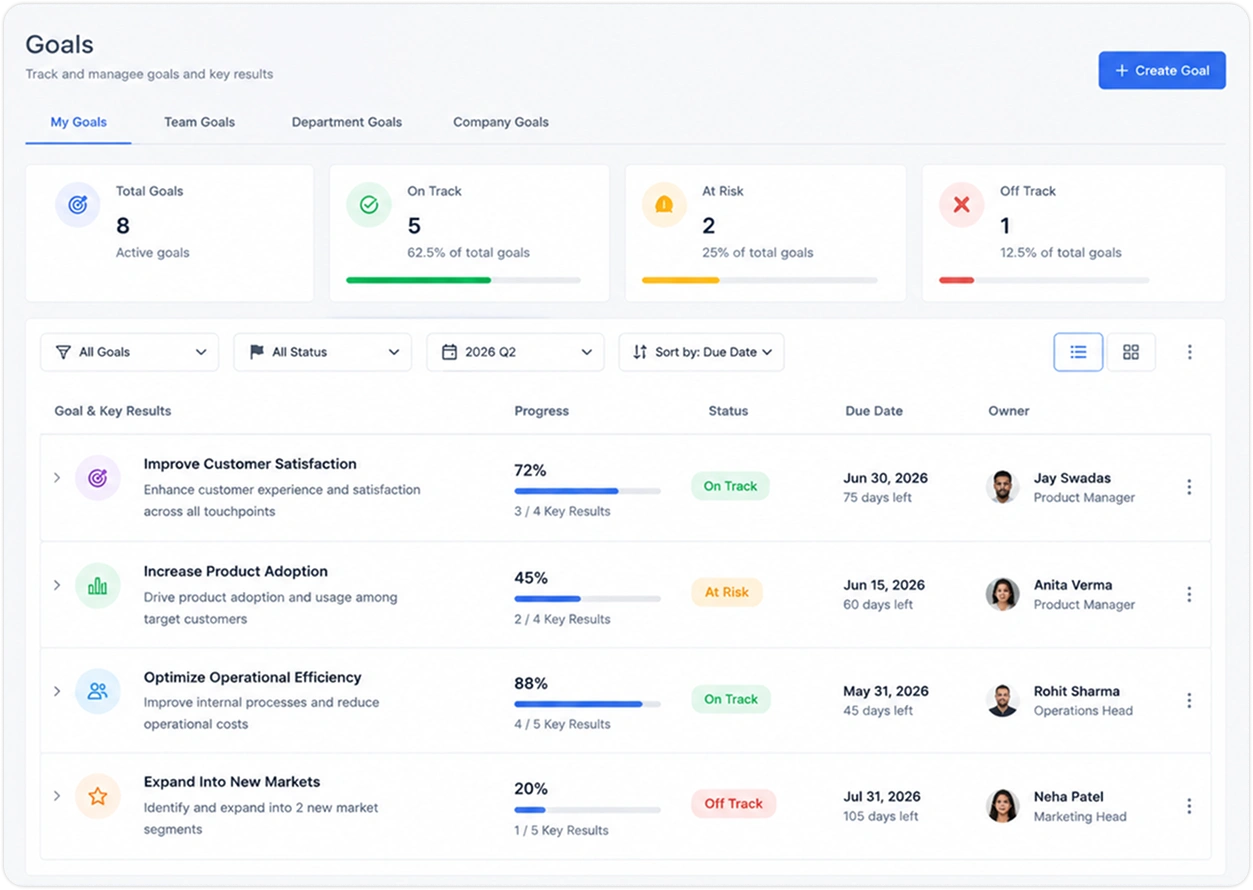
Goal Management
Align individual, team, and organizational goals through a structured goal management framework that promotes accountability and transparency. Create SMART goals, assign ownership, define timelines, set measurable success criteria, and monitor progress throughout the review cycle. Managers and employees can regularly review achievements, update milestones, and ensure personal objectives remain aligned with evolving business priorities and organizational strategies.
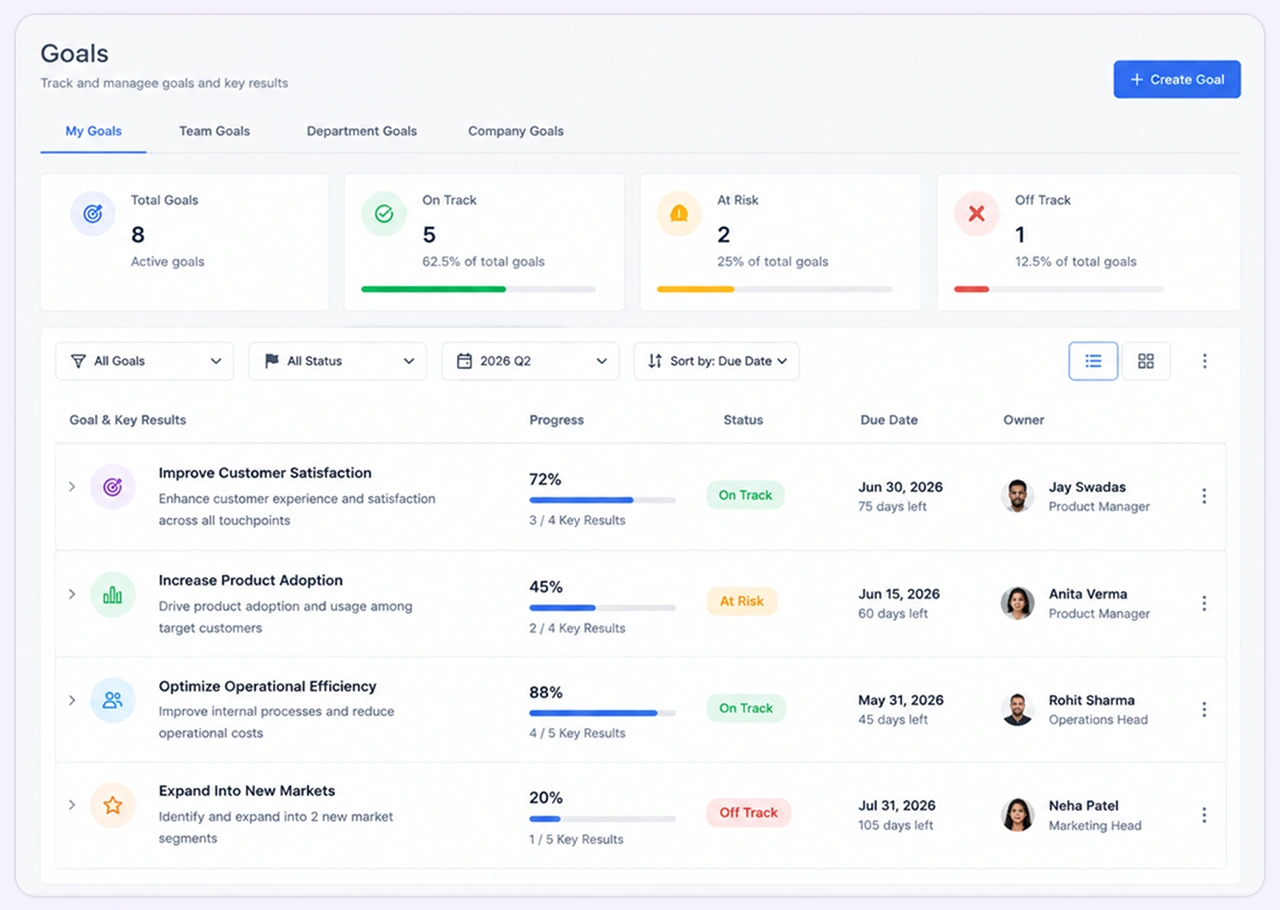
1:1 Meetings
Strengthen manager-employee relationships through structured one-on-one meetings that encourage regular communication, coaching, and career discussions. Schedule recurring meetings, document discussion points, assign action items, track commitments, and maintain meeting history for future reference. Consistent conversations help address challenges early, recognize achievements, and support employee engagement, productivity, and professional development.
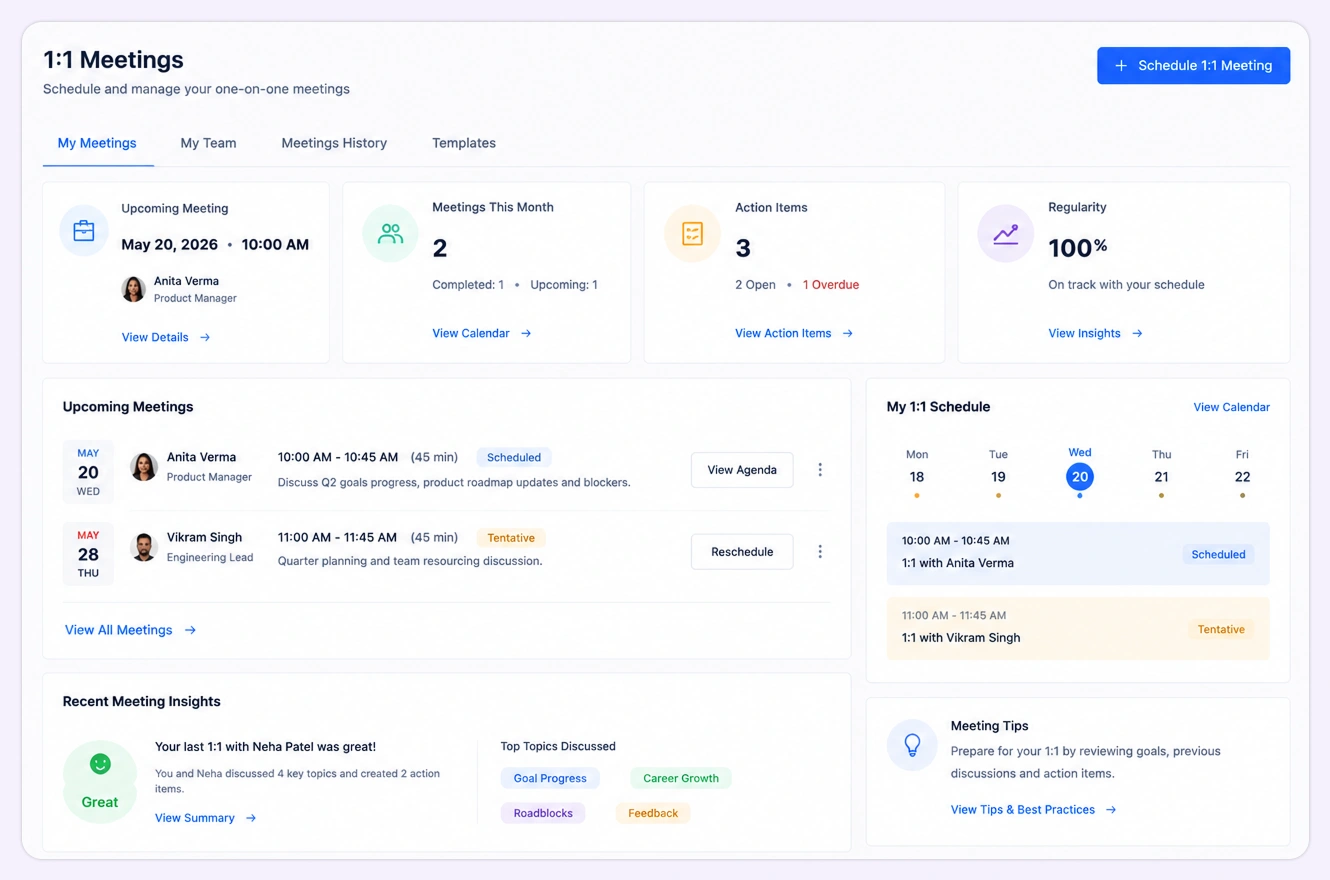
KPI Tracking
Measure employee performance using configurable Key Performance Indicators (KPIs) that reflect individual responsibilities, departmental objectives, and organizational goals. Monitor progress in real time, compare performance against predefined targets, and generate data-driven insights that help managers identify achievements, improvement areas, and performance trends throughout the review period.
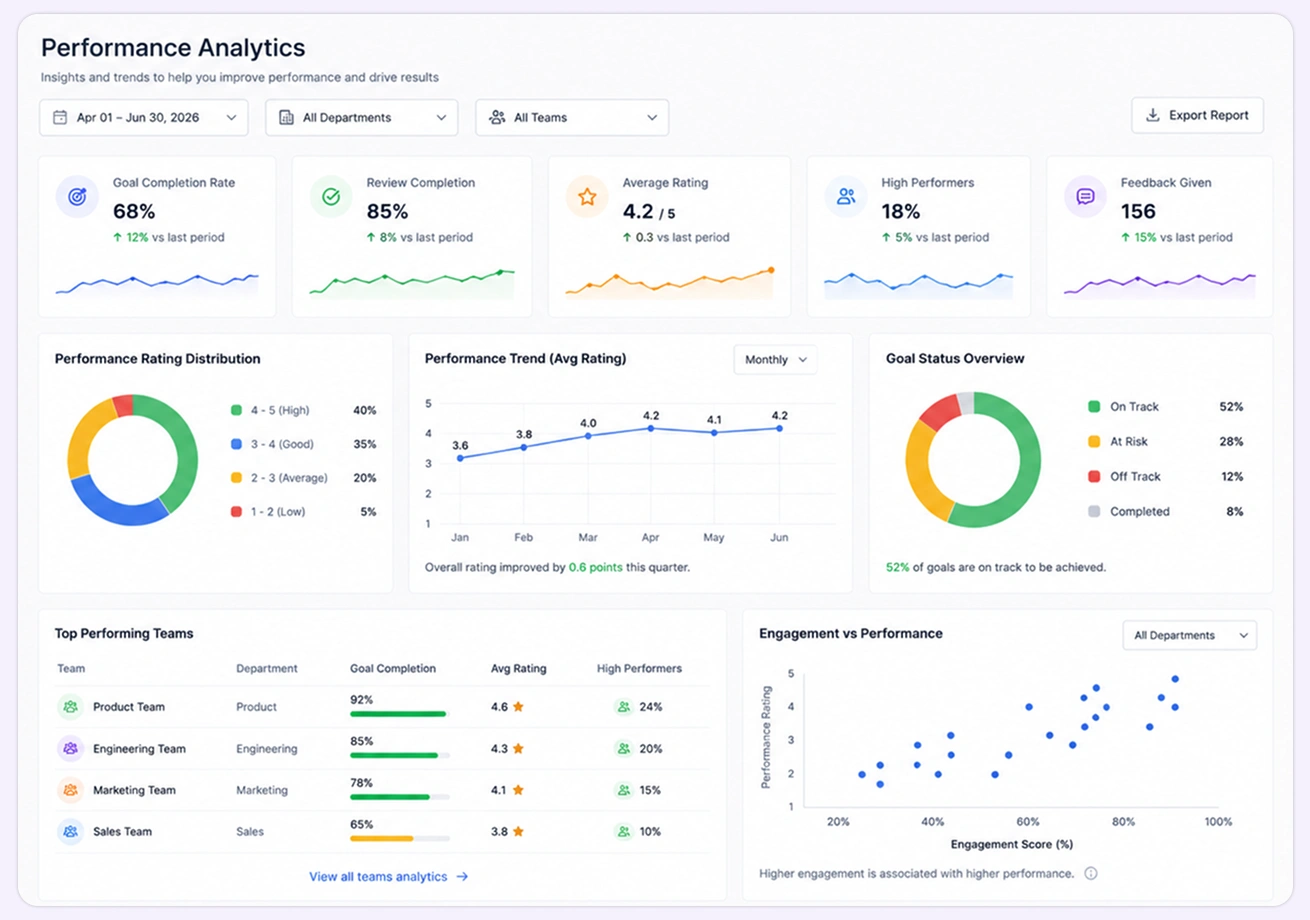
Competency Reviews
Evaluate employees beyond measurable targets by assessing core competencies such as leadership, communication, teamwork, problem-solving, technical expertise, and behavioral skills. Define role-specific competency frameworks, conduct structured evaluations, and identify strengths and development opportunities that support career growth, succession planning, and future leadership development.
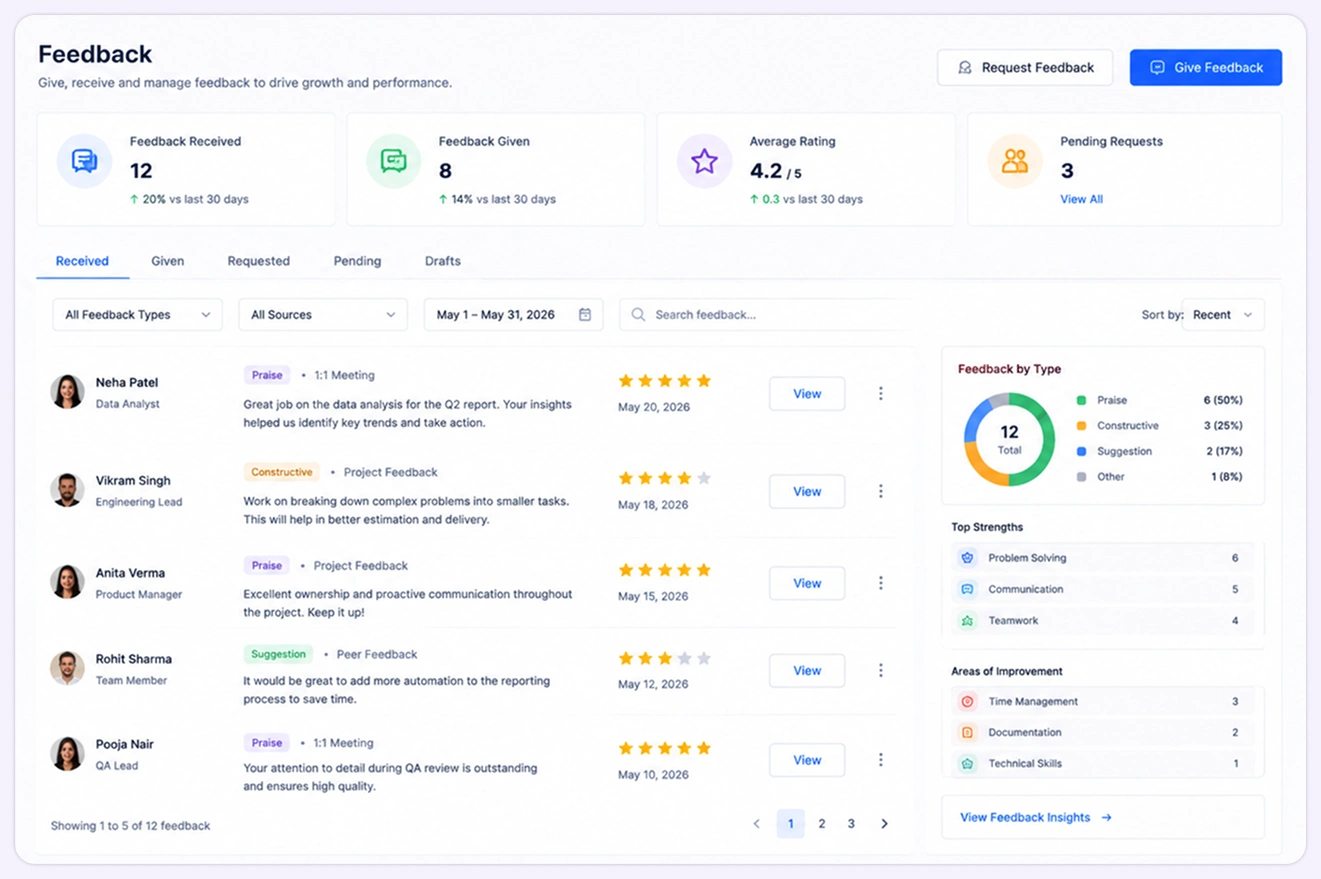
Continuous Feedback
Foster a culture of continuous improvement by enabling employees, managers, and peers to exchange timely feedback throughout the year instead of relying solely on annual appraisals. Recognize accomplishments, provide constructive guidance, document observations, and encourage ongoing conversations that improve engagement, strengthen collaboration, and accelerate employee growth.
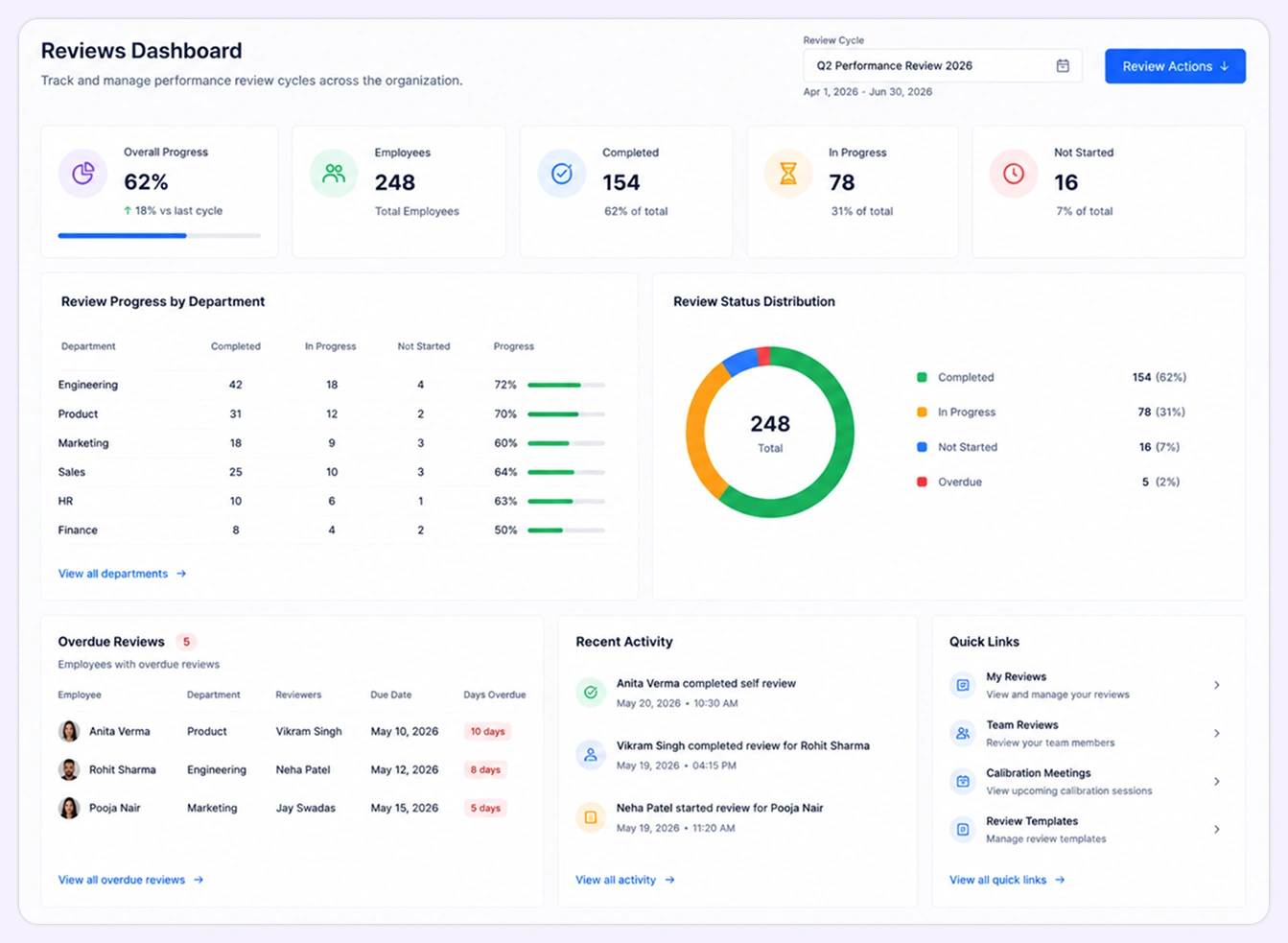
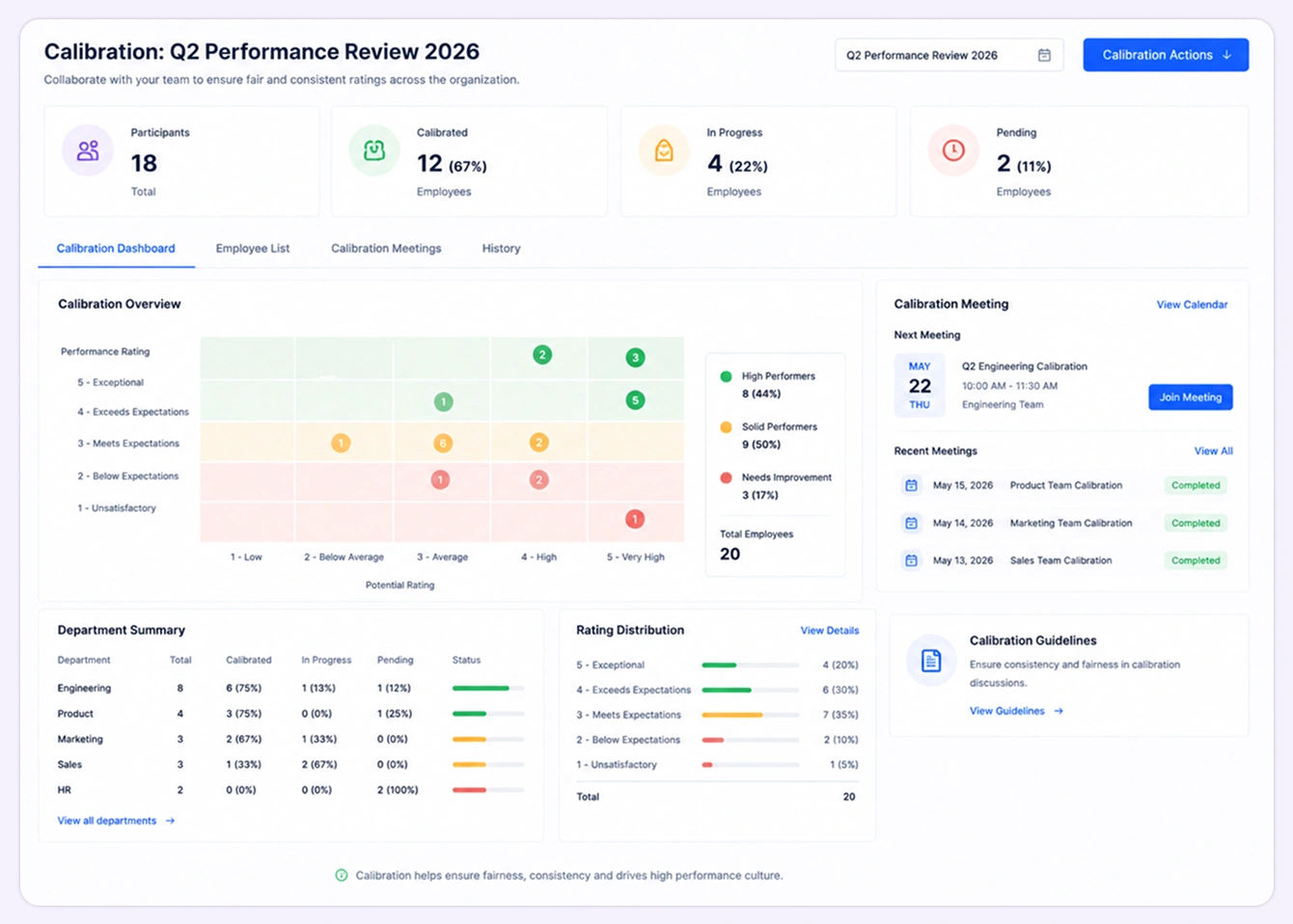
Performance Ratings
Conduct structured performance evaluations using configurable rating scales, weighted evaluation criteria, and multi-level approval workflows. Consolidate achievements, KPI results, competency assessments, and feedback into comprehensive performance reviews that ensure fair, transparent, and objective employee evaluations while supporting compensation and promotion decisions.
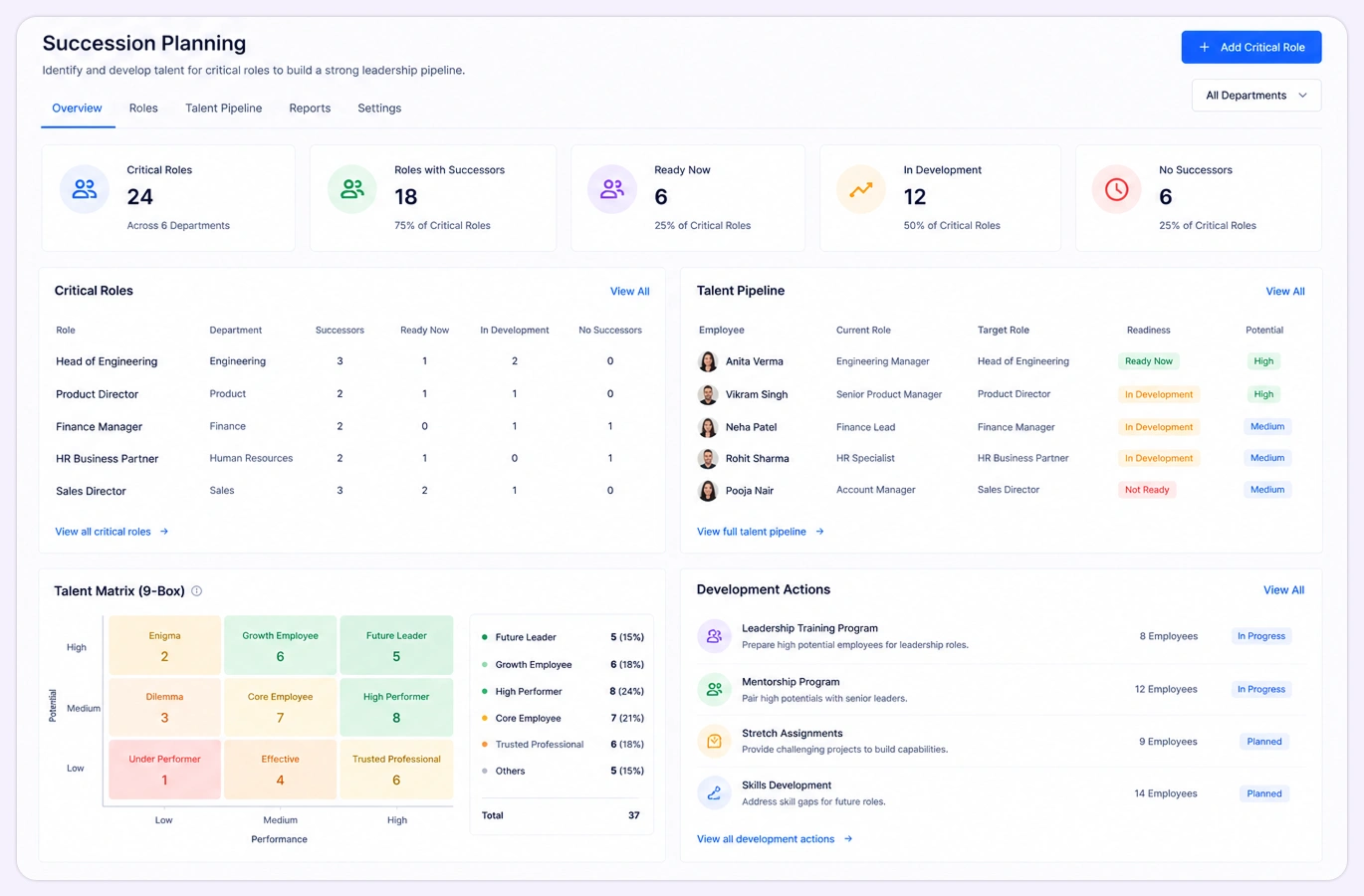
Succession Planning
Identify high-potential employees and prepare future leaders through strategic succession planning. Evaluate employee readiness, map successors for key positions, identify competency gaps, and create personalized development plans that strengthen leadership pipelines while ensuring business continuity during organizational growth or leadership transitions.
Goal Management
Align individual, team, and organizational goals through a structured goal management framework that promotes accountability and transparency. Create SMART goals, assign ownership, define timelines, set measurable success criteria, and monitor progress throughout the review cycle. Managers and employees can regularly review achievements, update milestones, and ensure personal objectives remain aligned with evolving business priorities and organizational strategies.
1:1 Meetings
Strengthen manager-employee relationships through structured one-on-one meetings that encourage regular communication, coaching, and career discussions. Schedule recurring meetings, document discussion points, assign action items, track commitments, and maintain meeting history for future reference. Consistent conversations help address challenges early, recognize achievements, and support employee engagement, productivity, and professional development.
KPI Tracking
Measure employee performance using configurable Key Performance Indicators (KPIs) that reflect individual responsibilities, departmental objectives, and organizational goals. Monitor progress in real time, compare performance against predefined targets, and generate data-driven insights that help managers identify achievements, improvement areas, and performance trends throughout the review period.
Competency Reviews
Evaluate employees beyond measurable targets by assessing core competencies such as leadership, communication, teamwork, problem-solving, technical expertise, and behavioral skills. Define role-specific competency frameworks, conduct structured evaluations, and identify strengths and development opportunities that support career growth, succession planning, and future leadership development.
Continuous Feedback
Foster a culture of continuous improvement by enabling employees, managers, and peers to exchange timely feedback throughout the year instead of relying solely on annual appraisals. Recognize accomplishments, provide constructive guidance, document observations, and encourage ongoing conversations that improve engagement, strengthen collaboration, and accelerate employee growth.
Performance Ratings
Conduct structured performance evaluations using configurable rating scales, weighted evaluation criteria, and multi-level approval workflows. Consolidate achievements, KPI results, competency assessments, and feedback into comprehensive performance reviews that ensure fair, transparent, and objective employee evaluations while supporting compensation and promotion decisions.
Succession Planning
Identify high-potential employees and prepare future leaders through strategic succession planning. Evaluate employee readiness, map successors for key positions, identify competency gaps, and create personalized development plans that strengthen leadership pipelines while ensuring business continuity during organizational growth or leadership transitions.
Inspire Growth Through Meaningful Performance Conversations
Transform performance management from a once-a-year activity into a continuous process that drives employee engagement, leadership development, and organizational success.
Goal-Driven Performance
Align employee objectives with business priorities through measurable goals, real-time progress tracking, and transparent performance expectations.
Continuous Employee Development
Support ongoing learning and career growth through regular feedback, coaching sessions, competency assessments, and personalized development plans.
Fair & Transparent Evaluations
Standardize performance reviews using measurable KPIs, competency frameworks, and configurable rating systems that promote consistency and reduce bias.

Future-Ready Workforce
Develop leadership pipelines through succession planning and talent identification, ensuring your organization is prepared for future growth and organizational change.