Ticketing & Support
Simplify Service Requests. Resolve Issues Faster.
Deliver exceptional internal support with a centralized ticketing platform that streamlines service requests, automates workflows, tracks issue resolution, and keeps employees informed through every stage of the support process.
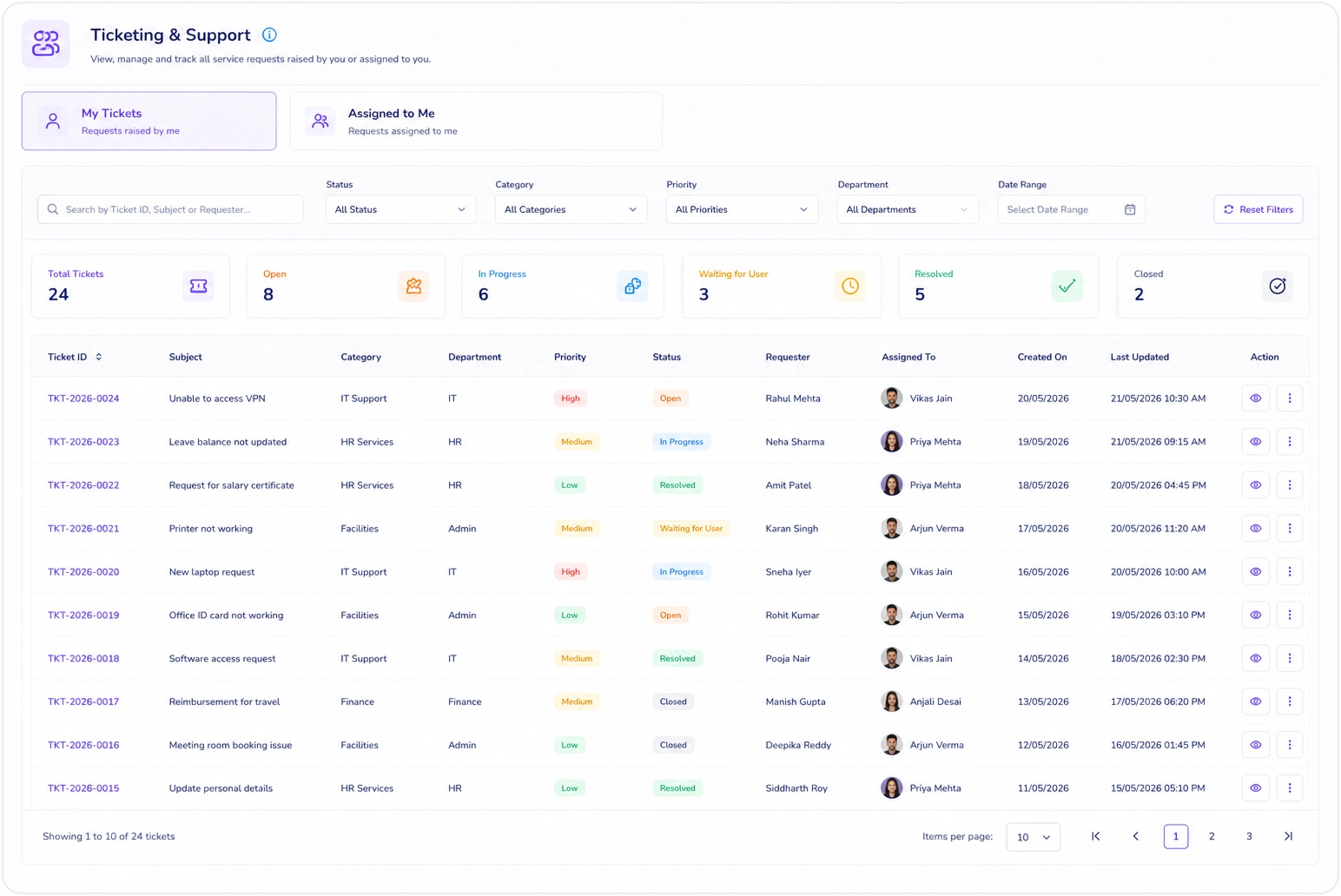


Service Requests
Provide employees with a centralized self-service portal to raise requests for IT support, HR services, administration, facilities, finance, asset management, or any other internal function. Users can categorize requests, attach supporting documents, monitor request status, and communicate directly with support teams throughout the resolution process. A structured request management system improves service quality, reduces response times, and enhances the overall employee experience.
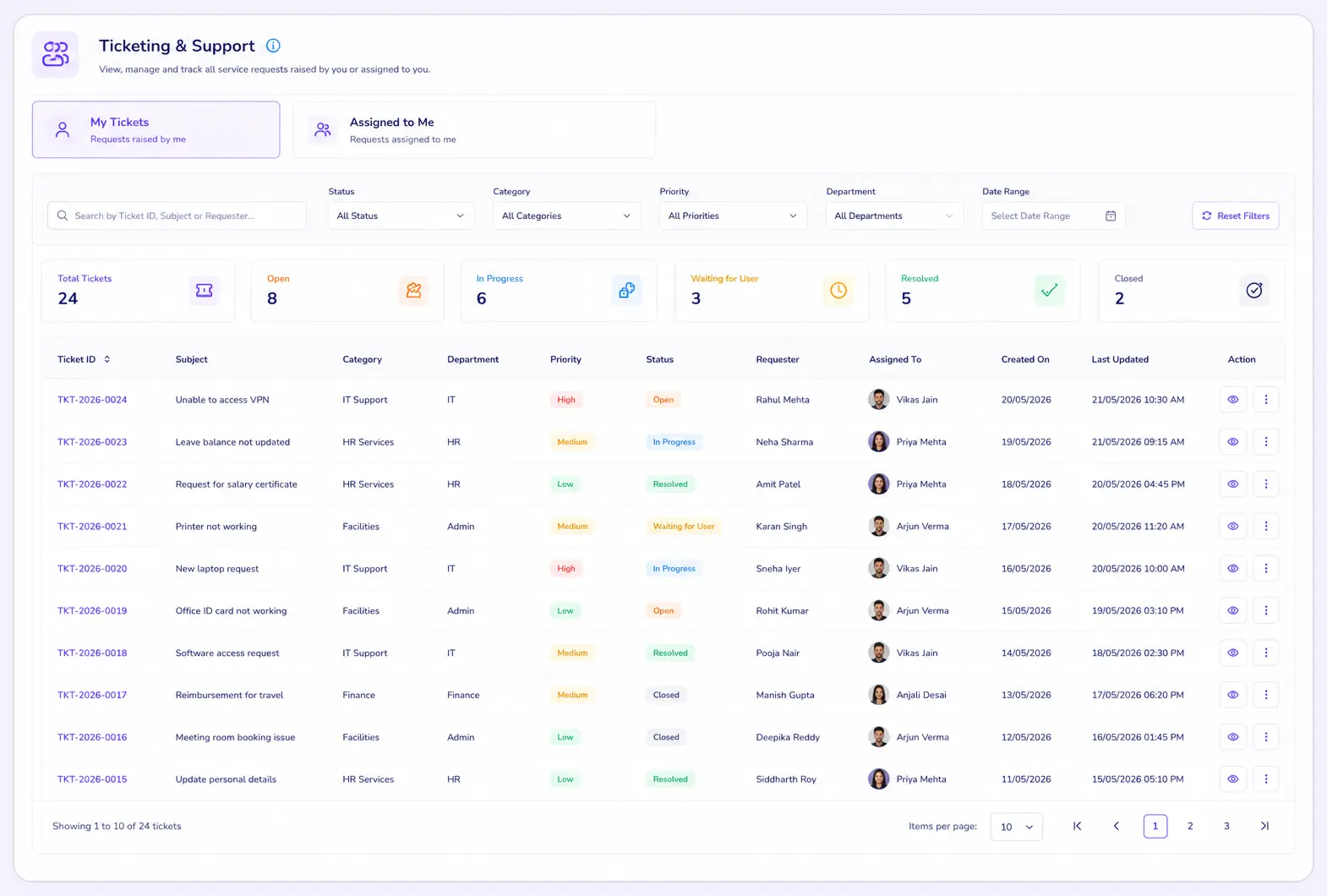
Issue Tracking
Track every support request from creation to resolution through a comprehensive ticket lifecycle. Assign priorities, categorize issues, define service owners, monitor progress, and maintain a complete history of updates and communications. Managers gain full visibility into pending, in-progress, and resolved tickets, helping teams identify recurring issues, improve accountability, and ensure timely resolution of employee concerns.
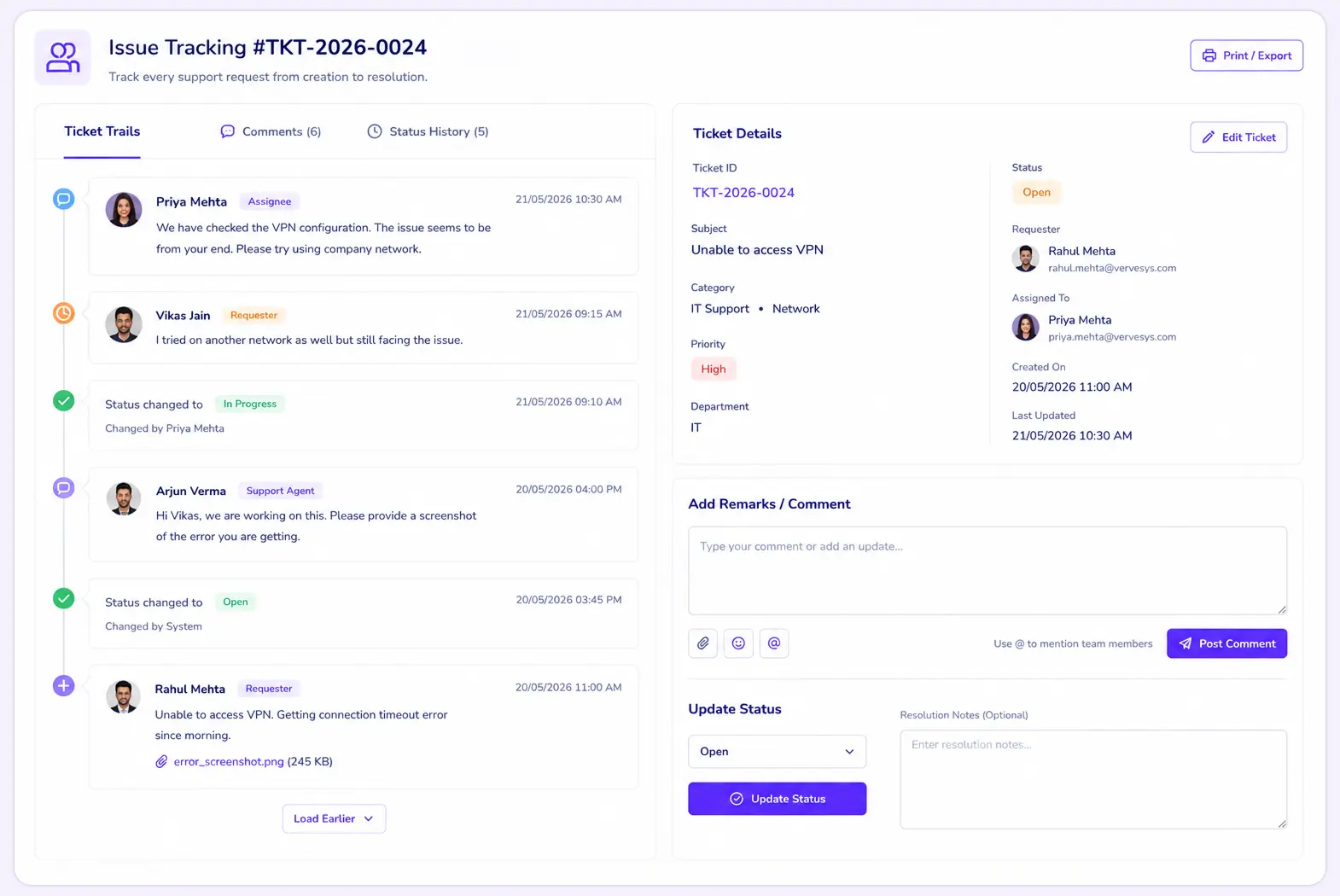
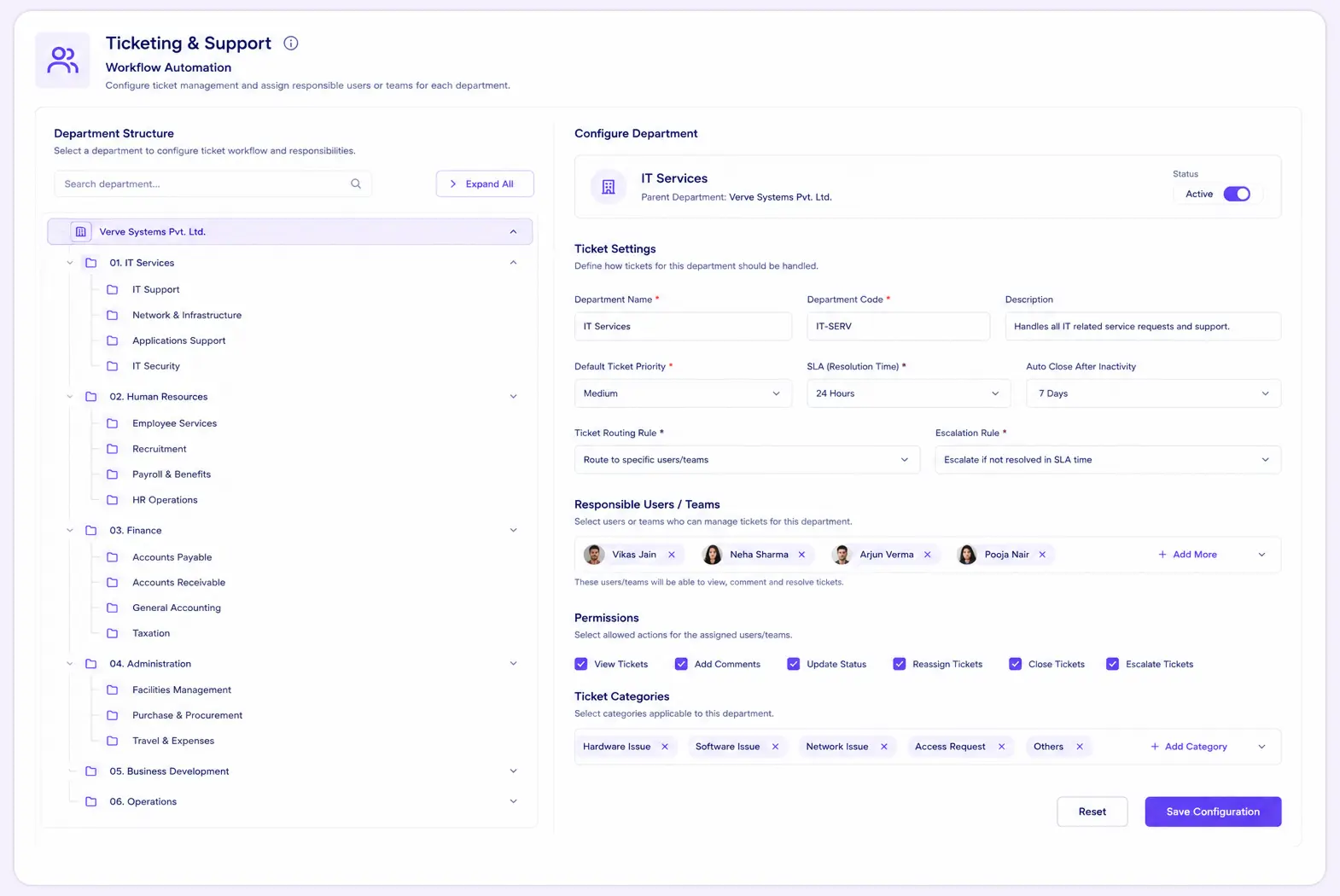
Workflow Automation
Automate ticket assignment, approvals, escalations, routing, and resolution workflows based on predefined business rules. Requests can be automatically directed to the appropriate department or support personnel according to request type, priority, location, or service category. Workflow automation minimizes manual intervention, standardizes service processes, reduces response times, and ensures consistent service delivery across the organization.
Notifications
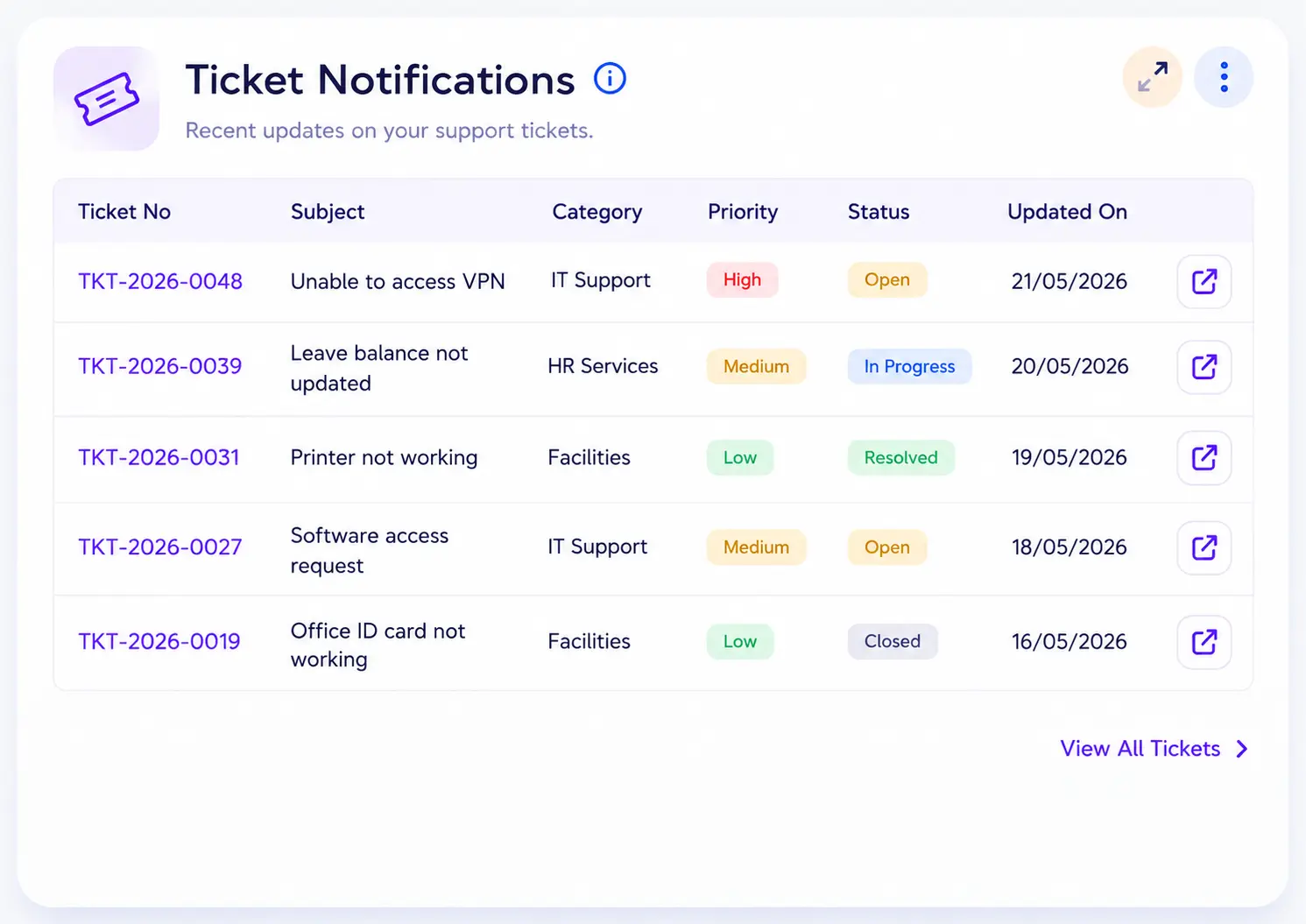
Keep employees and support teams informed through automated notifications at every stage of the ticket lifecycle. Real-time alerts notify users about ticket creation, assignments, status updates, approvals, comments, escalations, and issue resolution via email, mobile notifications, or in-app messages. Proactive communication improves transparency, minimizes follow-ups, and ensures stakeholders remain informed until every request is successfully completed.
Service Requests
Provide employees with a centralized self-service portal to raise requests for IT support, HR services, administration, facilities, finance, asset management, or any other internal function. Users can categorize requests, attach supporting documents, monitor request status, and communicate directly with support teams throughout the resolution process. A structured request management system improves service quality, reduces response times, and enhances the overall employee experience.
Issue Tracking
Track every support request from creation to resolution through a comprehensive ticket lifecycle. Assign priorities, categorize issues, define service owners, monitor progress, and maintain a complete history of updates and communications. Managers gain full visibility into pending, in-progress, and resolved tickets, helping teams identify recurring issues, improve accountability, and ensure timely resolution of employee concerns.
Workflow Automation
Automate ticket assignment, approvals, escalations, routing, and resolution workflows based on predefined business rules. Requests can be automatically directed to the appropriate department or support personnel according to request type, priority, location, or service category. Workflow automation minimizes manual intervention, standardizes service processes, reduces response times, and ensures consistent service delivery across the organization.
Notifications
Keep employees and support teams informed through automated notifications at every stage of the ticket lifecycle. Real-time alerts notify users about ticket creation, assignments, status updates, approvals, comments, escalations, and issue resolution via email, mobile notifications, or in-app messages. Proactive communication improves transparency, minimizes follow-ups, and ensures stakeholders remain informed until every request is successfully completed.
Deliver Faster, More Efficient Employee Support
Improve service quality, reduce response times, and streamline internal support operations with an intelligent ticketing platform that keeps every request organized and accountable.

Centralized Service Desk
Manage all employee requests through a single platform, providing complete visibility into support activities across HR, IT, Finance, Administration, and other business functions.

Faster Resolution Times
Automate ticket routing, prioritization, and escalations to ensure requests reach the right teams quickly and are resolved within defined service timelines.

Improved Transparency
Give employees complete visibility into the status of their requests while enabling support teams to collaborate efficiently and maintain clear communication throughout the resolution process.

Actionable Service Insights
Monitor ticket volumes, response times, resolution trends, and team performance through real-time dashboards and reports that help continuously improve service delivery.